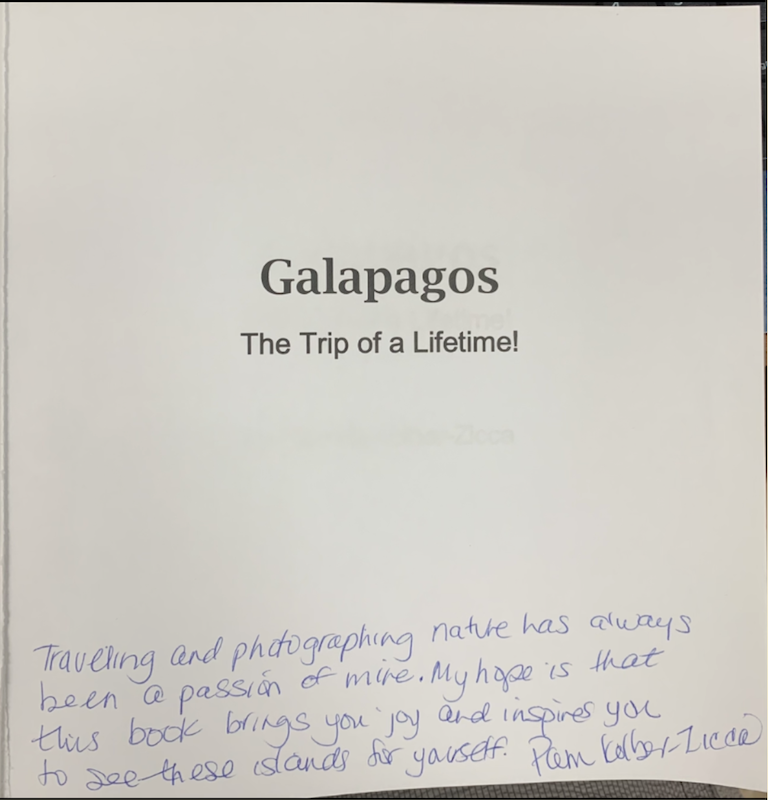
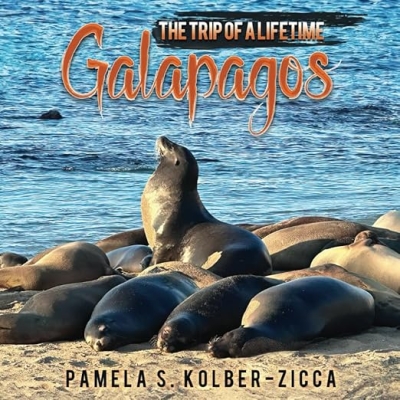
On July 22nd, from 7pm-8pm, Yonkers Crestwood Library will be hosting local author and photographer Pam Kolber-Zicca for a slideshow presentation based on her book Galapagos: The Trip of a Lifetime. She is excited to share the details of her journey and hopes that she can encourage others to experience the beauty and wonders of the islands. She also plans to shed some light onto the publishing industry through her journey as an author.
In preparation for this event, Crestwood staff member Hanora Woodruff contacted her with some questions that would allow library patrons to learn more about her and her island adventure. The correspondence went as follows:
Hanora (H): Starting off, what inspired your love of photography, particularly wildlife photography? Was this something you always envisioned yourself doing, or was this something you discovered a passion for later on? The same goes for writing. Did you have a formal education in writing before becoming an author, or was it just something you took a stab at?
Pam (P): What inspired my love of photography? As far back as I can remember I always appreciated nature. It was in 2020 when I was furloughed from my teaching job. I teach swimming for a living and the athletic club where I worked closed in March of 2020. I would spend my days driving around my town and adjacent towns photographing and making videos to keep myself busy. I took a photo of my mom's subway stop on the 1 line in [New York City] and that's what sparked my interest in making and selling cards. My dad had gifted me a couple of different single-lens reflex cameras a few years ago. I take a lot of photos with the Nikon I own, though most of the photos in my latest book The Trip of a Lifetime Galapagos were all taken with my cell phone. More for convenience than anything else and the newest phones have amazing cameras, though capturing birds in flight for me is not easy with a cell phone. So long story short to answer your question, photography was something I dabbled in in college for credit and then many years later to document how I was spending my time during the pandemic.
My writing for both books I have published in the last 4 years were photo journalistic in nature. Growing up, I struggled with reading printed work and writing papers for classes. I graduated college with a BS in Speech Pathology but lacked the self confidence to extrapolate what I was reading into a paper. Free flow writing / journaling came easy to me. These questions of yours have gotten me thinking as to how I decided to write a book. I became an author because I wanted to share two stories. Nature as Sanctuary Seeking Refuge in the Pandemic was a book I wrote and was featured by the Crestwood library back in December of 2021 virtually . My second book, Galapagos: The Trip of a Lifetime, was something that came to mind after we got home from our trip. I had no idea while on the trip that I was going to write a book. I took photos that interested me and then chose my favorites and wrote about my experiences. I tried to keep a journal while on vacation and stayed off social media for the entire time we were away and didn't post, which was relaxing too. Staying present with family was and is very important to me.
H: In the preface, your brother writes that the Galapagos "is a glimpse into a world where human presence and pressure is greatly minimized." Were there any moments that stood out on the trip that reflect this sentiment? Any experiences where you felt that you could only have witnessed it there?
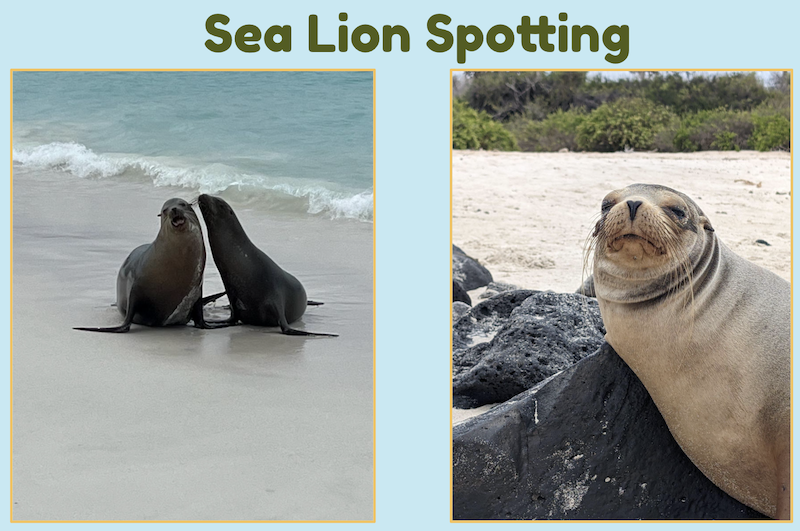
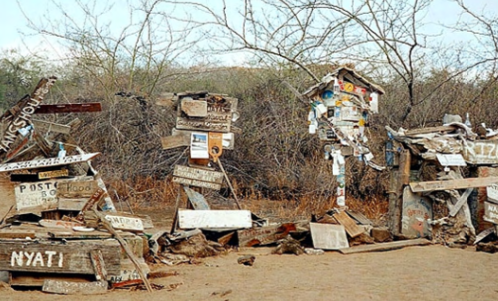
P: While we were in the Galapagos Islands, you got a feeling that you were the only ones on the island with the animals. By law, there can only be 16 people at a time on the islands and the visits are kept to a very rigid schedule. The Galapagos Conservancy, which sets the regulations to help preserve the islands and to keep them from eroding, just raised the price per person coming on to the islands from $100 to $200 a person. The animals were so unphased by visitors on the island, especially the sea lions. They would just lay on the beach, very unaware of our presence. The rule was you had to stay 6 feet away from them. Seeing all the diverse wildlife, from land and marine iguanas to sally lightfoot crabs, could only be experienced in the Galapagos. One very interesting part was there is a "post-office" so to speak on one of the islands we went to. Visitors would fill out postcards and leave them in a glass box, to protect them from getting wet in rainy weather. When we arrived on the island and looked through the postcards, we took ones that we thought lived close to us to mail once we got home from our trip. We received a postcard in the mail from a couple that had collected a postcard . I was surprised, though I was unable to respond back as they didn't leave an address on the postcard.
H: I also want to ask about your insight into conservation efforts taking place on the islands. What is the greatest area of concern on the islands and how does the community (both scientific and local) show support for that cause?
P: The greatest concern both scientifically and locally is keeping the islands healthy…The Galapagos Conservancy is a wonderful organization that is doing just that by keeping regulations in place.
H: Finally, what message do you want the audience to take away from your book the most? What do you believe is the most integral aspect of the islands that anyone visiting or studying them should know?
P: That the Galapagos is a destination that is something special. A trip like that takes lots of planning in advance and my book’s Resource section explains in detail how to go about making this trip yourself. For us, it was a trip of a lifetime that was pulled off by Billy Kolber, my brother, who thrives on this kind of trip planning.
We hope you’ll join us at 7:00 PM at Crestwood Library on July 22 to hear more from Pam firsthand! After the presentation, books will be sold and there will be a book signing over light refreshments. Come out and support a local author!