
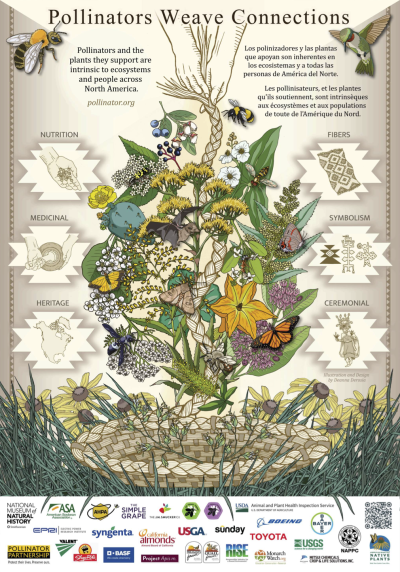
As National Pollinators Month finishes, it is important to remember that raising awareness and preserving pollinators doesn’t stop here. This month, the library made you aware of the pollinators in our lives with displays, storytimes, and programs about a variety of pollinators. These creatures are vital for passing pollen dust from one plant to another to help grow flowers, fruits, vegetables, and nuts.
The Pollinators Partnership points out that “Birds, bats, bees, butterflies, beetles, and other small mammals that pollinate plants are responsible for bringing us one out of every three bites of food. They also sustain our ecosystems and produce our natural resources by helping plants reproduce.” This organization’s website is full of valuable information about the pollinator population, providing proper plants for pollinators, and how to preserve pollintaors. The site has 7 Things You Can Do For Pollinators, including planting gardens with native plants, avoiding or reducing pesticides, and the big one - reducing your impact on climate change because pollinator populations are dramatically affected by it. Here’s a handy guide to planting native gardens: Pollinator Planting Card - by Region (Northeast).
There are also these tips posted on NationalDayCalendar.com:
- Choose bright flowers - The colors and scent attract pollinators to your garden.
- Plant for every season - While this primarily means to choose a variety of plants so you're attracting pollinators all year long, it also has another purpose. In the winter, these plants may be dormant, but they will provide a variety of seeds for pollinators to eat, bringing them back year after year.
- Welcome insects - Most of them are pollinators, too. Good bugs have the benefit of helping to keep pests at bay.
- Invite birds to your garden - Add birdhouses, provide bird seed or flowers they enjoy, and supply a water source.
Another great resource is the U.S. Fish and Wildlife Service’s site, including the Center for Pollinator Conservation, because it highlights events and initiatives where anyone can be involved.
Yonkers Public Library has a great collection of books for all ages about pollinators including:
- The mighty pollinators
- Tiny + wild: build a small-scale meadow anywhere
- If bees disappeared
- World of Pollinators: A Guide for Explorers of All Ages: Fun Projects, over 600 Amazing Facts About Plants, Bees, Beetles, Birds, and Butterflies
These resources are available online with your library card:
- The Pollinators - a documentary you can watch on DVD or stream on Kanopy
- Protecting pollinators: how to save the creatures that feed our world
- Animal Pollinators
Happy planting everyone! Let’s keep it native and attract those pollinators that help feed us, provide medicines, and even help grow fibers for fabrics.
Nancy Wissman is the part-time Children’s Librarian at Crestwood Library. Her family is growing many plants this year! Nancy is especially excited about bringing science to Crestwood with the Saturday STREAM storytime, which combines her love of story reading and storytelling with her new passion for science. Nancy has been a librarian for over 30 years, working in several libraries in different library departments, but most enjoys connecting children with literacy.